EQUIMO BLOG

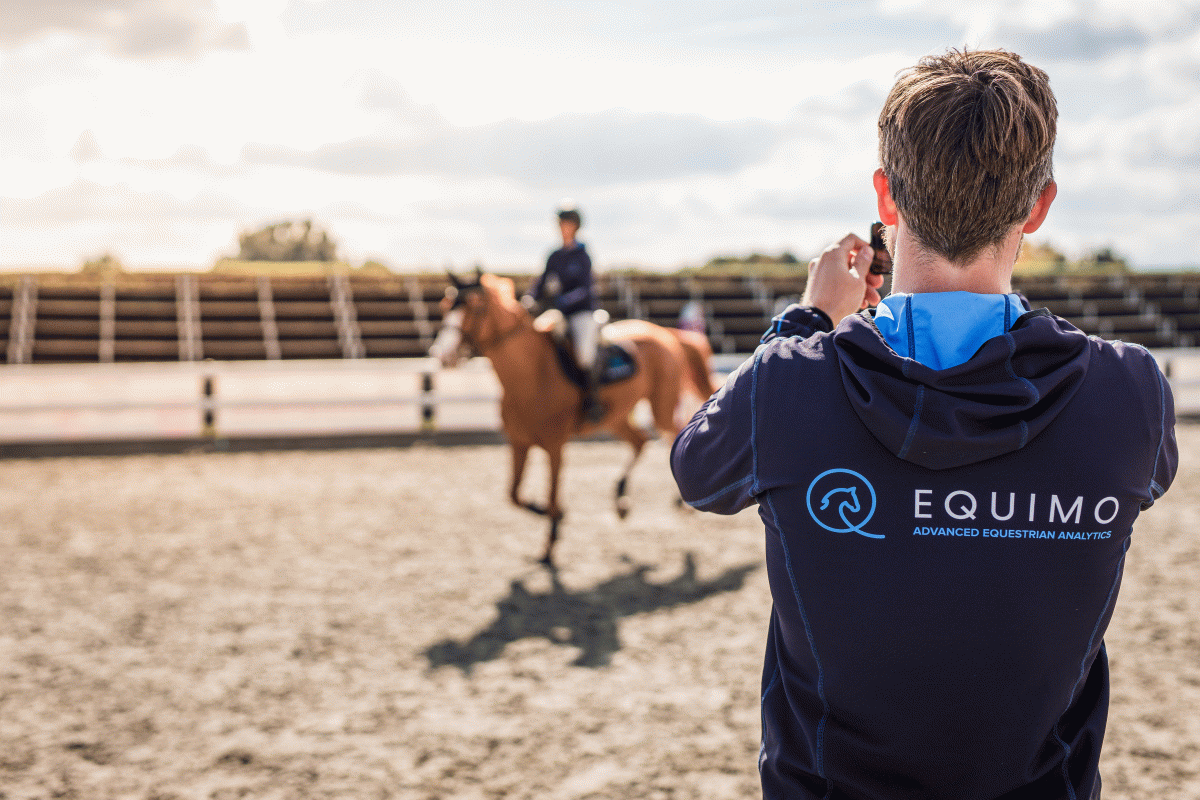
Pain in horses is rarely obvious in its early stages. Horses, as the prey animals they are, have been evolutionary programmed to hide pain, so by the time we see signs like changes in movement or behavior, the issue has often already progressed. This is one of the biggest challenges in equestrian training: recognizing when something is beginning to go wrong, not when it’s already visible.
Today, with access to training data, we have the opportunity to notice subtle changes earlier, especially through physiological signals like heart rate.
Here are three key signs to look out for.
During consistent training, your horse’s heart rate should follow a relatively predictable pattern. If you start noticing sudden spikes in heart rate during exercises that are usually well tolerated, it may be a sign of something more. These peaks can indicate discomfort, pain, or increased stress response. However, the key here is context. If the workload hasn’t changed, but the physiological response has, it’s worth paying attention to.
Recovery time is one of the most important indicators of your horse’s condition. After exercise, heart rate should gradually return to its baseline within a timeframe that is typical for your horse. When you notice recovery time being much longer, it can mean that the body of your four-legged partner is under increased stress connected to overload in training, underlying discomfort, or even developing pain. Monitoring recovery over time helps you understand how your horse performs, so when you suspect any issues, you know their normal values and recognize if something's amiss.
One of the most valuable insights data can provide is consistency over time. If your horse performs a similar type of training under similar conditions, their physiological response should remain relatively stable. When it doesn’t, for example if one session shows normal heart rate and another shows unusually high values for the same effort, it is a warning signal something isn't right. This fluctuation can mean emerging fatigue, compensation patterns, or discomfort that you can't yet see with your eye.
While these signals don’t diagnose pain, they help you see unexpected changes. When you are aware that something's different, you can adjust your training schedule, watch your horse more closely, or do other proactive steps to prevent further worsening of their symptoms.
So the goal isn’t to rely only on numbers. It’s to combine what you feel with what you can measure — and use both to build healthier and happier equine athletes. Because often, the most important signals are the ones you don’t see right away.
CONTACT US INFO@EQUIMO.COM



Advintec spol. s.r.o, Korunní 1302/88, 101 00 Prague, Czech Republic
