EQUIMO BLOG

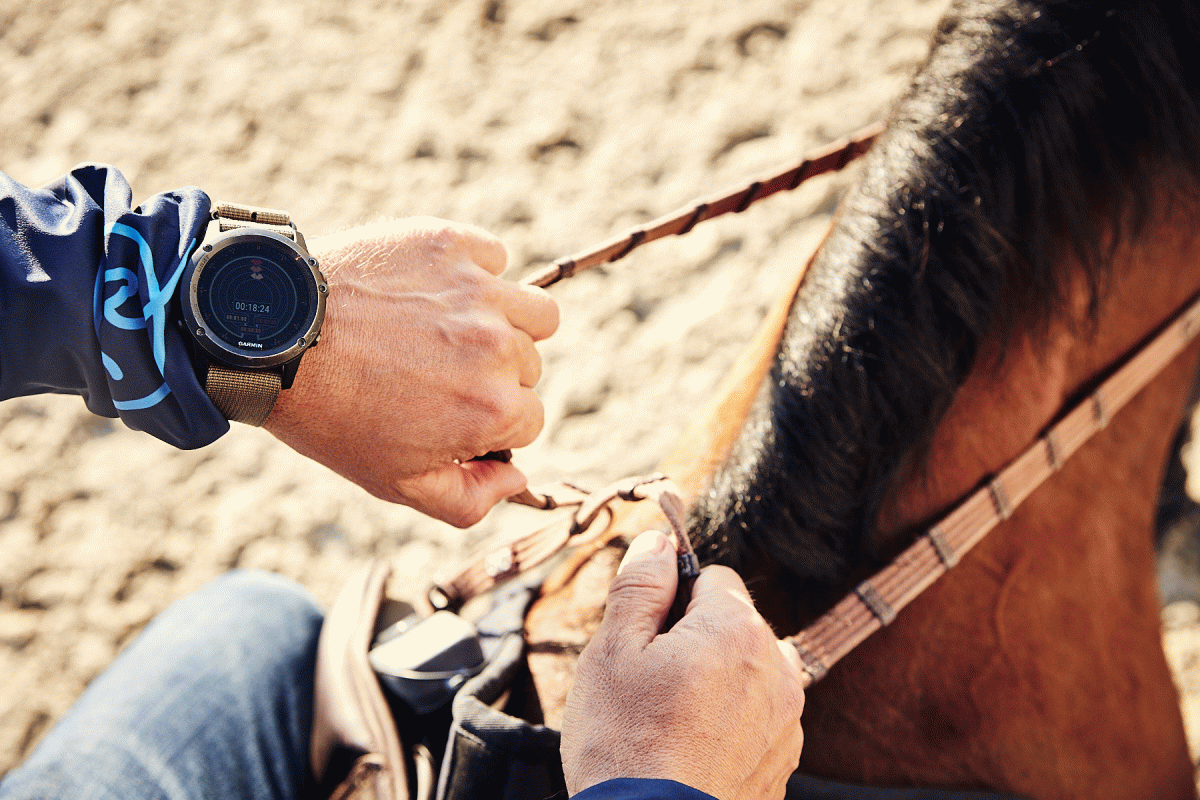
Horse training has always lived at the intersection of feel, experience, and responsibility. Riders are taught to listen, observe, adjust — often relying on subtle signals that can be difficult to explain, let alone measure. But caring deeply can sometimes bring uncertainty: Am I doing enough? Too much? Am I missing something important?
In a sport where our partner cannot speak, guessing has long been part of the process. Today, however, riders have the opportunity to replace part of that guessing with understanding.
Every horse is different. Fitness, temperament, recovery rate, stress tolerance — all of it varies not just from horse to horse, but from day to day. Riders often have to make decisions based on:
visual impressions
previous experience
habitual training routines
what "usually works"
While intuition is invaluable, it is also shaped by emotion, pressure, and limited visibility into what the horse is experiencing internally.
Some of the most important signals happen beneath the surface:
How hard your horse is actually working
How quickly they recover after effort
How their body responds to stress
Whether fatigue is accumulating over time
These are not always obvious in movement or behavior — especially in highly motivated or stoic horses. Without insight into these internal responses, riders may unintentionally push too hard, or hold back when progress would be safe.
Training smarter does not mean increasing intensity, adding sessions, or chasing numbers. It means:
Understanding how your horse responds to different types of work
Recognizing patterns over time
Making informed adjustments instead of reactive changes
Supporting long-term wellbeing alongside performance
One of the biggest concerns riders have about technology is losing feel or becoming overly dependent on numbers. In reality, well-used data does the opposite.
Insights work best when they:
Confirm what you already feel
Highlight changes you might not notice yet
Provide reassurance when decisions feel uncertain
When intuition and data work together, riders gain confidence — not because the system decides for them, but because their choices are grounded in information.
Understanding your horse’s responses over time allows training to become more sustainable:
Better balance between effort and recovery
Reduced risk of overtraining
Earlier awareness of stress or fatigue trends
More confidence in long-term planning
Progress no longer depends on guessing correctly — it grows from informed, thoughtful decisions.
Being a mindful equestrian will always come with responsibility. But responsibility doesn’t have to mean pressure.
Moving from guessing to understanding creates space for clarity, confidence, and trust — in your horse, and in yourself as a rider.
Training smarter isn’t about controlling every variable. It’s about seeing more clearly, so you can continue doing what riders do best: listen, adapt, and care.
CONTACT US INFO@EQUIMO.COM



Advintec spol. s.r.o, Korunní 1302/88, 101 00 Prague, Czech Republic
